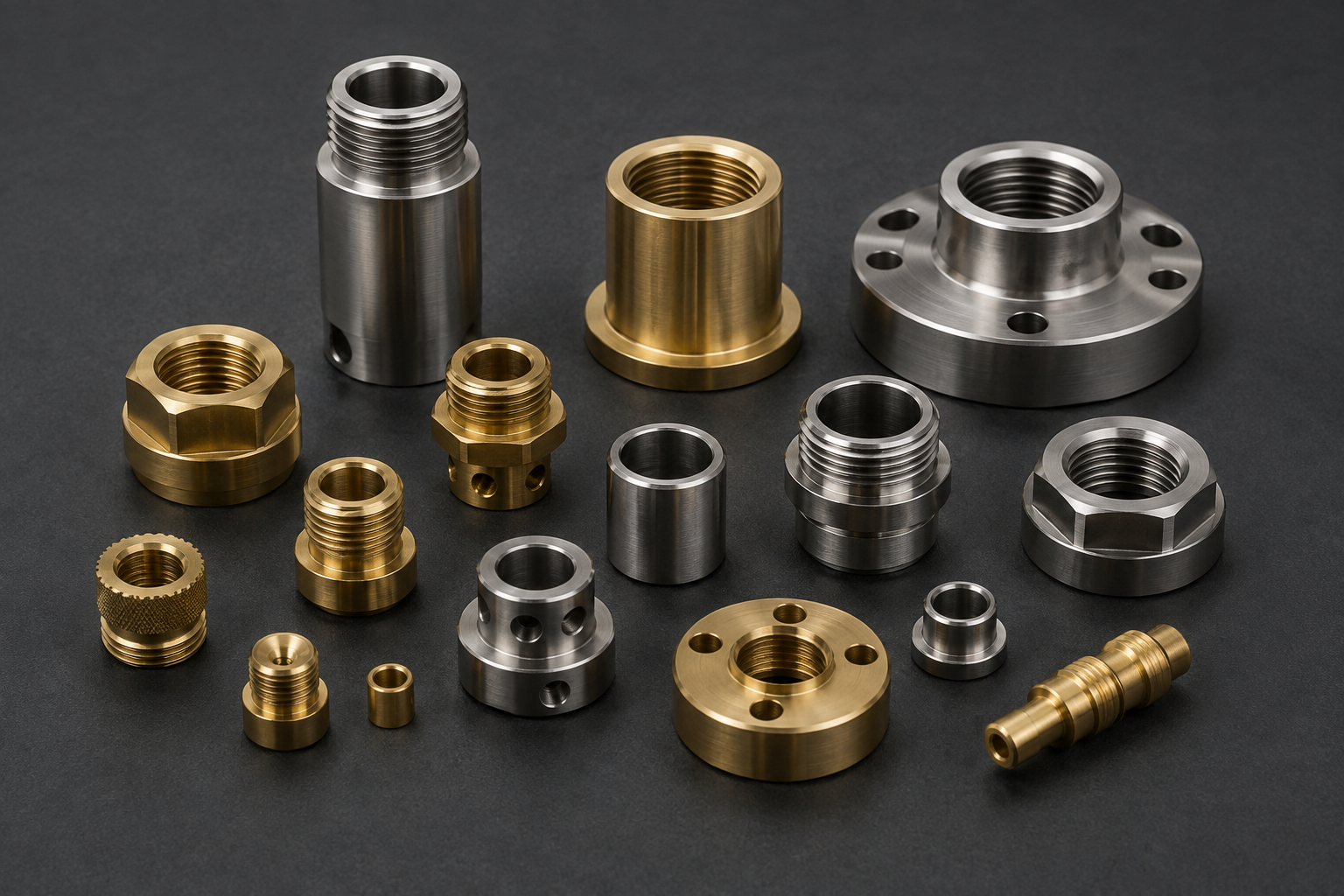
Select material from the part's real requirements.
Start with function and environment, then balance strength, weight, corrosion resistance, conductivity, appearance, post-treatment and cost. State an exact grade and standard when required. If the design is still open, share the operating conditions so the material can be reviewed with the drawing.
01
Aluminum: useful when lower weight matters
Aluminum is often considered for components where low density, corrosion performance and a range of decorative or protective finishes are useful. The selected alloy and temper affect strength, machinability, finish response and dimensional behavior.
Define the required grade, condition and surface treatment on the drawing. For anodized parts, also clarify color, cosmetic surfaces, protected features and any dimensional allowance associated with the finish.
02
Stainless steel: balance corrosion and mechanical needs
Stainless steel is commonly evaluated for parts exposed to moisture, chemicals, cleaning or appearance requirements. Stainless grades are not interchangeable: corrosion resistance, strength, magnetic response, machinability and heat-treatment behavior can differ.
Describe the service environment rather than using “stainless steel” as the complete specification. Identify the exact grade and condition when these characteristics affect performance.
03
Carbon and alloy steel: strength, wear and treatment options
Carbon and alloy steels may suit shafts, pins, fasteners and structural components where strength, hardness, wear resistance or heat treatment is important. Their corrosion protection often depends on the selected coating or surface treatment.
Specify grade, heat-treatment condition, hardness requirements and coating as separate controlled requirements. Critical threads, fits and finished dimensions should be reviewed together with the treatment sequence.
04
Brass: machinability, appearance and functional properties
Brass is used in fittings, inserts, connectors and decorative or functional components. Different brass grades can vary in composition, machinability, strength, corrosion behavior and regulatory suitability.
State the application and any composition, plating, appearance or compliance requirement in the RFQ. Do not assume that one familiar brass designation is an automatic substitute for another.
05
Copper: conductivity with different machining considerations
Copper may be selected for electrical or thermal functions, but grade, purity, strength and machinability vary. Conductivity requirements should be stated explicitly rather than inferred from the material name.
Include the required grade, functional conductivity criteria, joining or plating needs and any areas that must remain free of surface treatment.
06
Compare the complete manufacturing route
Material choice influences machining, tool access, distortion risk, deburring, heat treatment, coating and inspection. A lower raw-material price does not necessarily produce a lower finished-part cost if the design requires difficult processing or additional controls.
Review geometry, tolerance, quantity and finish together. Use the surface finish guide to define coating and final-part requirements, then see the CNC machining RFQ guide for the remaining quotation details.
07
Control grade, certificates and approved alternatives
Use the drawing number and revision to control the approved material specification. State whether a material certificate or other supporting document is required before quotation and production.
If an alternative grade is proposed, compare the relevant properties and obtain customer approval before changing the specification. The inspection and documentation scope should then follow the approved requirement.
MATERIAL RFQ
Buyer checklist
Include these details when they affect performance, compliance or acceptance.
Which materials can CKJM discuss for custom CNC parts?
Typical customer-specified metals include aluminum, stainless steel, carbon and alloy steel, brass and copper. Suitability, availability and the exact grade must be reviewed for each drawing and order.
What if I do not know the exact material grade?
Share the application, operating environment, loads, weight target, corrosion exposure, electrical or thermal requirements, surface finish and target quantity. This information supports a practical material discussion, but final selection remains part of the project approval.
Can one material grade be replaced with a similar grade?
A proposed alternative can differ in chemistry, mechanical properties, corrosion performance, machinability or finish response. No substitution should be made without the customer's approval and an updated project specification.
Should I specify a material standard on the drawing?
When the standard and grade are important, identify them clearly on the controlled drawing and RFQ. Also state the required condition, temper or heat treatment and any certificate requirements. CKJM will review the requested specification for the project.
Can material certificates be supplied?
Material certificates or other supporting documents can be provided according to the confirmed customer and project requirements. Request them during quotation so sourcing, traceability and documentation can be planned.
Does the material affect tolerances and surface finish?
Yes. Material condition, geometry, machining process, tolerance, surface roughness and post-treatment interact. These requirements should be reviewed together rather than selecting the material in isolation.
REVIEW YOUR APPLICATION
Send the drawing and material requirements.
Tell us the application, environment, quantity, finish and required documents, or contact Zoe directly.