Quality control starts with an approved specification.
Reliable inspection depends on a controlled drawing, a confirmed material and finish, clearly marked critical features and an agreed inspection plan. CKJM supports incoming material checks, first article inspection, in-process control and final inspection, with project-specific reports available when confirmed during quotation.
01
Review the drawing and revision before production
The approved drawing is the primary reference for manufacturing and inspection. It should identify the drawing number and revision, units, material, finish, dimensional and geometric tolerances, datums, threads and any special acceptance criteria.
Buyers should clearly mark critical-to-function features instead of relying only on general tolerances. Mating dimensions, sealing surfaces, alignment features and safety-related characteristics require particular attention during the technical review.
02
Confirm material and document requirements
State the exact material grade and condition whenever they are known. Also identify whether the order requires a material certificate or other supporting document. CKJM can provide corresponding reports or certificates according to the confirmed customer and project requirements.
If an alternative material is proposed during review, it should not be used without buyer approval. Material and documentation requirements should be settled before purchasing and production begin. Compare CNC machining materials ↗
03
Use first article inspection to verify the setup
First article inspection checks the initial part against the agreed drawing before the order moves through the planned production run. The required characteristics and report format should be defined during quotation, especially when the buyer has a specific first article template or approval process.
A first article review does not replace ongoing process control. It confirms that the initial setup and interpretation of the specification are aligned.
04
Control critical features during machining
In-process checks help detect changes before they affect a larger quantity. The frequency and method depend on the process, material, geometry, tolerance, production quantity and agreed inspection requirements.
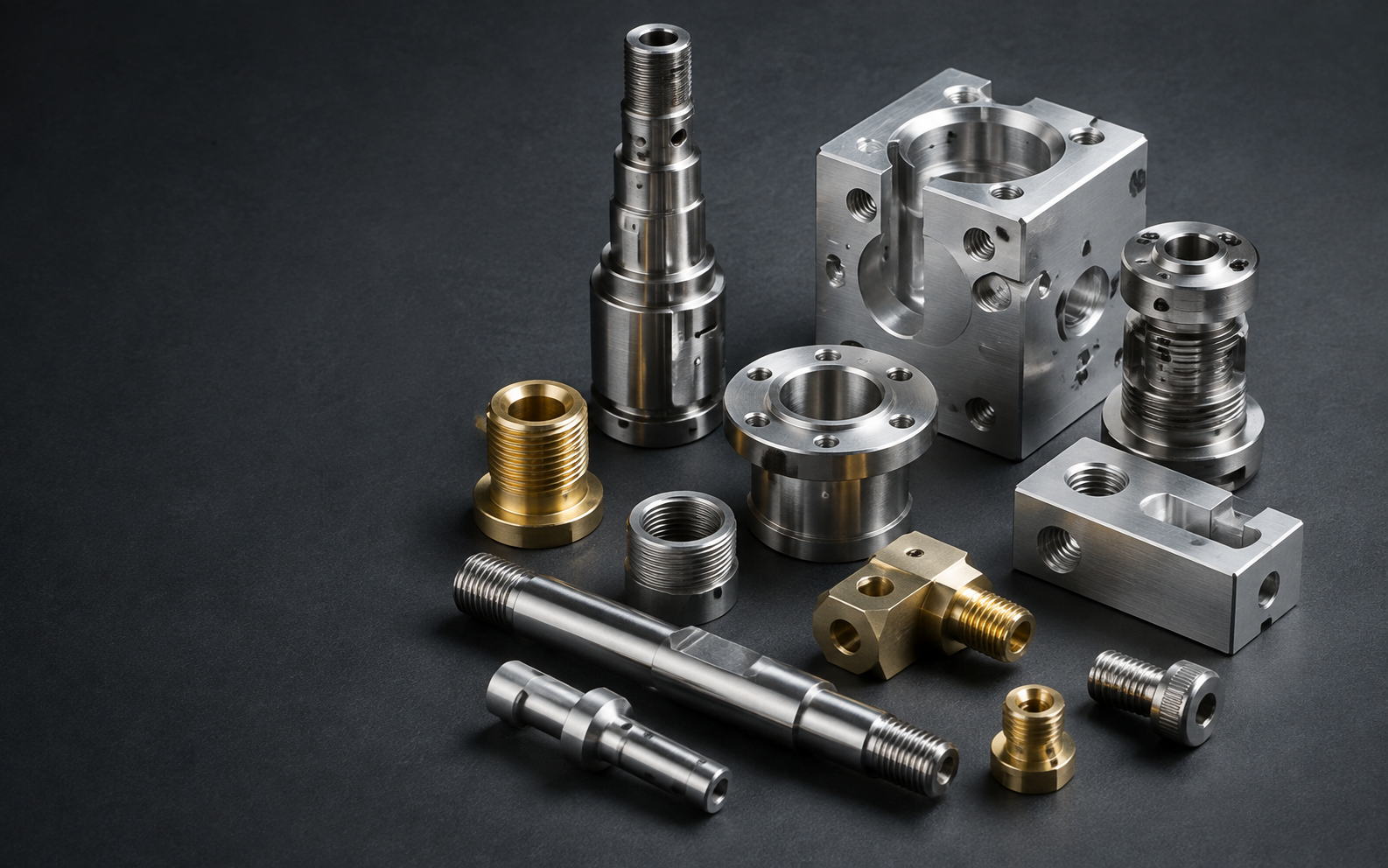
For CNC turned parts, CNC milled components and custom fasteners, inspection may involve dimensional measurement, visual review, thread verification or other methods appropriate to the specified feature. The exact gauges, frequency and acceptance plan should be confirmed for the project rather than assumed.
05
Match the inspection equipment to the feature
CKJM lists 2D optical measurement, projector inspection and CCD sorting among its inspection capabilities. Equipment selection depends on the feature being checked; no single method is suitable for every geometry or tolerance.
CCD sorting can support 100% sorting of suitable characteristics when this is technically appropriate and agreed in the inspection plan. Buyers should identify the characteristic to be sorted and the acceptance criteria before production.
06
Define final inspection, reports and release requirements
Final inspection verifies the order against the agreed specification and release criteria. If the buyer needs a dimensional inspection report, first article report, material document, special identification or other evidence, the scope should be listed in the RFQ.
Documentation added after production may require extra verification or may not be recoverable, particularly for material or traceability records. Agreeing the deliverables early reduces this risk.
07
Protect accepted parts through packing and shipment
Quality control continues after inspection. Define individual or bulk packing, separation, surface protection, labels, barcodes and export carton requirements according to the part and destination. CKJM can provide special packaging, barcodes and export labels according to customer requirements.
Cosmetic components and finished surfaces should include clear handling and appearance criteria so that inspection and packing teams work to the same standard.
QUALITY REQUIREMENTS
Buyer checklist
Include these items in the RFQ so the inspection scope can be reviewed before quotation and production.
01Controlled drawing number and revision
02Material grade and required documentation
03Critical dimensions, datums and tolerances
04Thread, fit and mating-part requirements
05Surface finish and cosmetic acceptance criteria
06Inspection or sampling requirements
07First article and dimensional report requirements
08Identification, traceability and packaging needs
Can CKJM provide material certificates and inspection reports?
Material certificates, dimensional inspection reports, first article reports or other supporting documents can be provided according to the confirmed customer and project requirements. Please identify the required documents during quotation.
How are critical dimensions selected for inspection?
Critical dimensions should be identified on the approved drawing, including tolerances, datums, threads, mating features and functional characteristics. The inspection scope is then confirmed for the project.
Does every order use the same inspection method?
No. The appropriate inspection method depends on the part geometry, tolerance, feature type, quantity and agreed quality requirements. Measurement and sorting requirements should be reviewed before production.
Can CKJM support 100% sorting?
CKJM has CCD sorting capability for suitable part features. Whether 100% sorting is appropriate, and which characteristics can be checked, must be confirmed for the specific part and inspection plan.
What should a buyer send for a quality review before quotation?
Send the controlled drawing and revision, material and finish requirements, quantities, critical dimensions, inspection or sampling requirements, required reports, packaging needs and any approved reference samples.
Can inspection documents be added after the order is placed?
Document requirements should be agreed during quotation whenever possible because they can affect material sourcing, inspection planning, lead time and cost. Late additions require a new project review.
REVIEW YOUR REQUIREMENTS
Send the drawing and inspection needs.
Upload the controlled drawing with material, quantity, critical dimensions and required quality documents, or contact Zoe directly.